

Home Healthcare, Hospice, and Information Technology Conference
Saturday, November 1, 2025 New Orleans, Louisiana, USA Hilton - New Orleans Riverside Chart Room
Toward Evidence-Based Adoption of Technology for Care at Home"
About
H3IT: Home Healthcare, Hospice, and Information Technology Conference is for all stakeholders interested in successfully leveraging technology, from decision-support tools to telehealth to artificial intelligence (AI), in providing care at home.
Since 2014, H3IT has provided an authoritative forum where evidence-based findings, information, and tools are communicated to achieve reduced costs, better care, and better outcomes. H3IT's interdisciplinary and applied elements make the conference relevant to home health providers, IT vendors, and government agencies.
H3IT 2025 will be held as a pre-conference for and co-located with the Annual Meeting of the National Alliance for Care at Home, the largest professional association for home healthcare and hospice in the US. The Alliance and its former organization NAHC has been our partner since 2018. The co-location of the H3IT and the Alliance's meetings provide many opportunities for synergy and networking. We encourage the audience to attend both meetings.
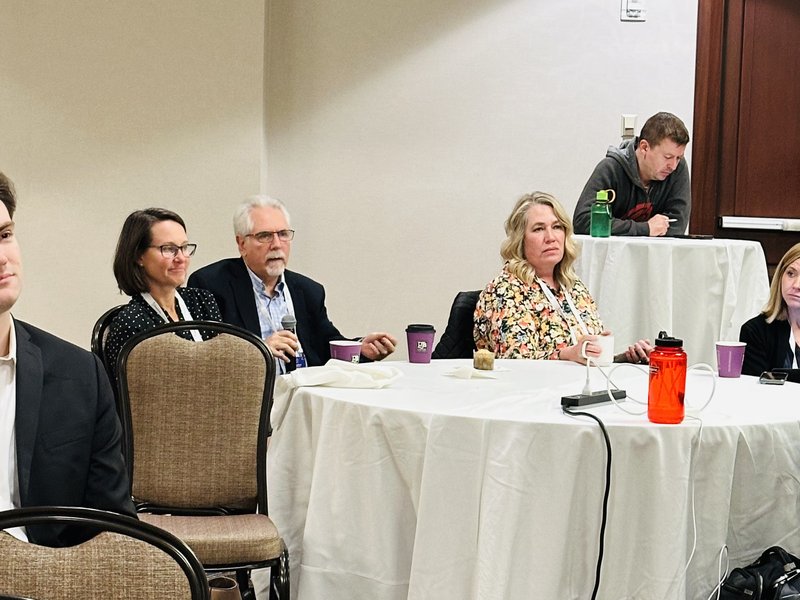
Photo Gallery 2025
Conference Registration
All H3IT logistics and registrations are handled by the Alliance. Therefore, H3IT registrations go through the the Alliance registration website. Note that H3IT is co-located with the Alliance, which provide opportunities to register for both events to maximize learning and networking experiences.
Please visit the page below to register for H3IT and/or the Alliance Conference and Expo:
Submissions
Home healthcare, hospice, information, and technology (H31T) conference invites abstract submissions in a variety of interdisciplinary and applied topics, including but not limited to:
- Implementing evidence into practice and policy. e.g., Empirical investigations and evaluations of Medicare Advantage
- Federal developments pertaining to the provision of care and research
- Ambient intelligence for home care
- Voice‑first assistive technologies
- Information Technology Maturity for Home Health Agencies
- Interoperability, data standards, terminologies, and health information exchange
- Evaluations of home health IT policies and initiatives
- Compliance with the Trusted Exchange Framework and Common Agreement (TEFCA)
- Security, privacy, and trust
- Data quality
- Using Artificial Intelligence (AI) to create disruptive positive changes in home healthcare. For example:
- Generative AI
- Natural language processing
- Evaluating AI
- Telehealth
- Family caregivers
- Innovations addressing workforce needs: Hiring and Retention, Education and training, etc.
- Platform-based development of healthcare apps and their effectiveness evaluation
- Evaluations of the Impact of Value-Based Purchasing
- Quality assurance for coding, documentation, and OASIS
- Preventing fraud, abuse, and waste, and facilitating reimbursement processes through the use of technology
- Data analytics, predictive modeling, and decision support for better care, better outcomes, and reduced costs
- Open-source solutions, tools, and strategies.
- IT adoption, development, implementation, and project management
- Business cases for adopting informatics and technology in home care: Special Interest on ROI Evaluations
- Creating Learning Health Systems (LHS) for home healthcare
- Innovative care delivery and business models supported by informatics and technology
- Business process improvement and re-engineering
- Clinical workflow modeling and improvement
- Smart homes, communities, and cities
There are two tracks:
- Research track for submissions describing completed or ongoing research
- Practice track for submissions describing issues related to practice and/or policy
By August 15, 2025 (11:59 pm) the abstracts must be submitted to the conference by sending en email attachment to the submissions@h3it.org address. Late submissions will not be considered. Each abstract should provide a one-page summary of an on-going or completed project written with at least 11-point fonts and one-half inch margin on all sides. The one-page limit excludes the list of references. If an abstract includes citations, the list of references should start from the beginning of the second page. The citations and references should follow a numbered style (JAMIA style is recommended). Each abstract must have a title and a list of the authors who significantly contributed to the study with their names, email addresses, and primary institutions. The body of an abstract should be structured as follows –
- Research Track: 1) Background, 2) Methods, 3) Results, 4) Discussion, and 5) Conclusion.
- Practice Track: 1) Problem Statement, 2) Learning Objectives (two to five), 3) Background, 4) Approach/Strategy 5) Findings/Observations/Results 6) Conclusion 7) Recommendations
The abstract submissions will be reviewed and evaluated by the program committee (PC) considering a number of factors such as relevance, novelty, significance, and conformance to submission and formatting rules. The authors of the accepted abstracts will be notified via email by the Notification of Acceptance Date.
The authors of the accepted abstracts will be required to perform the corrections or modifications suggested by the PC and provide a camera-ready copy to be archived by the H3IT conference. The accepted abstracts will be categorized by the PC for either oral or poster presentation. At least one author for each accepted abstract must register and present the study at the conference.
Program
ON-SITE REGISTRATION - CHART ROOM FOYER
H3IT TRAINEES DINNER
BREAKFAST
ON-SITE REGISTRATION AVAILABLE - CHART ROOM FOYER
SESSIONS START TIME - All Sessions in CHART ROOM.
OPENING AND WELCOME
Güneş Koru
H3IT Organizing Chair, Department of Health Policy and Management, University of Arkansas for Medical Sciences
OPENING KEYNOTE
Advancing Upstream Approaches: Designing a Home Health System Aligned with What Matters Most
Olga F Jarrin Montaner
Rutgers University
Coffee Break (Grab a coffee and come back -- The program has to continue due to limited time)
PRESENTATIONS SESSION I. DATA SCIENCE AND ANALYTICS
Patterns and Causes of Missed Visits in Hospice Care: A Retrospective Analysis of EMR Data
Robert J Rosati
and Tami M Videon
Visiting Nurse Association Health Group and Rutgers, Robert Wood Johnson Medical School
Multimodal Phone-Call Analytics Identify Hospitalization Risk in Home Healthcare
Zhihong Zhang,
Pallavi Gupta,
William Ho,
Yu-Wen Chen,
Sina Rashidi,
Fatemeh Nadi,
Sasha Vergez,
Margaret McDonald,
Zoran Kostic,
Julia Bell Hirschberg,
Maryam Zolnoori,
and Max Topaz
VNSNY
and International Relations Chair, School of Nursing, Columbia University
Understanding Missed Visits in Home Health Care: Patterns, Causes, and Opportunities for Intervention
Tami M Videon
and Robert J Rosati
Visiting Nurse Association Health Group and Rutgers, Robert Wood Johnson Medical School
A Qualitative Exploration of Stakeholder Needs for Publicly Available Data for Home Healthcare: A Status Report
Güneş Koru
and Ali Alsarhan
H3IT Organizing Chair, Department of Health Policy and Management, University of Arkansas for Medical Sciences
and University of Maryland Baltimore County
LUNCH (Grab your lunch and come back -- The industry keynote will be presented during lunch.)
INDUSTRY KEYNOTE
The Promise and Peril of Artificial Intelligence in Post-Acute Care
Beau Sorensen
Director of Operations, Administrator, CFO, and COO, First Choice, Curantis Solutions
PRESENTATIONS SESSION II. ARTIFICIAL INTELLIGENCE - SHOW ME THE EVIDENCE
Quantifying the Impact of a Predictive AI Sales Assistant on Referral Volume and Operational Efficiency in Home Health and Hospi
Mickel Mirchandani
Skyra.AI
Developing a Novel Approach to Video-Based Fall Risk Assessment in Home Healthcare Using Multimodal Large Language Models: A Pil
Pallavi Gupta,
Zhihong Zhang,
Meijia Song,
Martin Michalowski,
Xiao Hu,
and Max Topaz
VNSNY
and International Relations Chair, School of Nursing, Columbia University
Transforming Hospice Operations Through Comprehensive AI Integration: A Voice-First Approach to Reimagining Hospice
Matt Challberg
and Luca Ventura
Tallio
Coffee Break
PRESENTATIONS SESSION III. ARTIFICIAL INTELLIGENCE - SHOW ME THE EVIDENCE
Lost in Transition: Who Gets Sepsis Documented in Home Health Care?
Sang Bin You,
Miriam Ryvicker,
Yolanda Barron,
and Kathryn H. Bowles
General Chair, School of Nursing, University of Pennsylvania
Ambient Intelligence for Home Care
Kristin Martino
MEDITECH
Developing Next Gen Home Health EMR using Nursing Expertise and AI
Kathy Duckett
and Mary Narayan
Duckett Consulting and International Home Care Nursing Organization
CAREER MENTORING and DISCUSSION
How AI will be reshaping our career paths in the next decade in the industry and academia?
Beau Sorensen
and Güneş Koru
Director of Operations, Administrator, CFO, and COO, First Choice, Curantis Solutions
and H3IT Organizing Chair, Department of Health Policy and Management, University of Arkansas for Medical Sciences
CLOSING REMARKS AND ANNOUNCEMENTS
Güneş Koru
H3IT Organizing Chair, Department of Health Policy and Management, University of Arkansas for Medical Sciences
ADJOURNMENT
SOCIAL ACTIVITY
PLACE TO BE DETERMINED. Everybody is free to attend and on their own.
Advancing Upstream Approaches: Designing a Home Health System Aligned with What Matters Most

Morning Keynote Speaker:
Olga F. Jarrín Montaner, PhD, RN, FAAN
Hunterdon Professor of Nursing Research
Associate Professor, Division of Nursing Science
Rutgers Health School of Nursing
New Brunswick, NJ 08901
Drawing on more than a decade of research, this keynote tells a story of systems—and how they shape lives in their final chapters. It begins upstream, with the home health workforce: early studies that linked supportive work environments to reduced hospitalizations. It moves through midstream failures in access: revealing who gets referred to home health care, who gets left out, and how those gaps reflect structural inequities in our health system. And it arrives at the downstream outcomes that matter most: new evidence showing that earlier, sustained home care use among people living with dementia is associated with more days at home, greater use of hospice, and a more dignified death.
But this is not just a story of research—it’s a story of responsibility. What happens before a nurse knocks on the door—and what echoes long after they leave—is shaped by decisions made across this room. For the care innovators, informaticians, clinicians, and policy architects at H3IT, the message is clear: you are building the future of home-based care. Every dashboard, pathway, algorithm, and regulation contributes to the hidden infrastructure that determines whether older adults are seen, supported, and surrounded with dignity. This keynote invites you to advance the upstream approaches that will shape downstream outcomes—not just improving what is, but designing a home health system aligned with what matters most to the people we serve.
Brief biosketch:
Olga F. Jarrín Montaner, PhD, RN, FAAN is the Hunterdon Professor of Nursing Research at Rutgers University and an adjunct professor at the University of Pennsylvania School of Nursing. A nationally and internationally recognized home care researcher, her work focuses on improving access to and outcomes of home-based services for older adults, including those living with dementia. Her NIH-funded program of research leverages real-world data to examine the home health care workforce, care delivery, and late-life outcomes to inform person-centered, policy-relevant models of care.
The Promise and Peril of Artificial Intelligence in Post-Acute Care

Industry Keynote Speaker:
Beau Sorensen
First Choice, Director of Operations,
Administrator
CFO, and COO.
Post-acute care is characterized by intermittent encounters, heterogeneous data, decentralized teams, and constrained resources. These conditions magnify both the potential benefits of AI and the hazards from over-reliance, bias, and workflow misfit. Consequently, post-acute care faces simultaneous promise and peril from rapid AI adoption. For example, while AI can accelerate documentation, improve accuracy, and surface deeper clinical and operational insights, unguarded use risks cognitive off-loading (loss of human reasoning and critical thinking), automation bias, inequity amplification, privacy exposure, and unclear regulatory accountability.
This talk will introduce a translational framework Data → Model → Workflow → Governance, which can be useful for AI implementation. Organizations report reduced documentation time, improved coding/QA accuracy, and earlier detection of risk signals when AI is tightly integrated with workflow. Without safeguards, teams exhibit cognitive off-loading, increased acceptance of erroneous outputs, inequitable performance across subgroups, and hidden workload from poor integration.
Brief biosketch:
Beau has more than 25 years of experience in hospice and home care, with leadership roles spanning operations, finance, and administration. As a former senior executive at First Choice, he led initiatives that dramatically improved clinical outcomes, cut costs by over $1 million annually, and helped pioneer electronic medical record adoption in partnership with Allscripts. He currently serves as COO of Visionbound International and remains an active leader in national and state associations, including NAHC and HHFMA.
A frequent national speaker, Beau presents on healthcare innovation, AI, organizational culture, and change management. He also consults with organizations on EMR optimization, data analytics, and process improvement. His contributions have earned him multiple awards, including recognition from Microsoft, OnBase, and Allscripts.
Research Steering Committee (RSC)
RSC monitors and identifies the existing and emerging research directions to ensure that the solicited and accepted submissions are aligned with the relevant, significant, and impactful themes and topics in home healthcare, hospice, and information technology.

Kathryn H. Bowles
General Chair, School of Nursing, University of Pennsylvania

George Demiris
Program Committee Chair, Epidemiology and Informatics, University of Pennsylvania
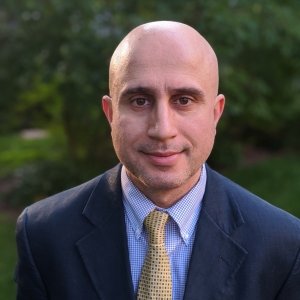
Güneş Koru
H3IT Organizing Chair, Department of Health Policy and Management, University of Arkansas for Medical Sciences

Max Topaz
International Relations Chair, School of Nursing, Columbia University

Dari Alhuwail
International Relations Chair, Information Science Department, Kuwait University
Program Committee (PC)
Program committee reviews and evaluates the submissions to ensure rigor and quality. The names and affiliations of the PC members are as follows. RSC and IAG members also serve as PC members.
- John Cagle, University of Maryland, Baltimore
- Birthe Dinesen, Aalborg University
- Sabine Koch, Karolinska Institute
- Robert Lucero, Columbia University
- Karen Marek, Arizona State University
- Michael Marschollek, Medical School
- Karen Monsen, University of Minnesota
- Huong Nguyen, Kaiser Permanente Research
- Debra Oliver, University of Missouri
- Guy Pare, HEC Montreal
- Kavita Radhakrishnan, University of Texas at Austin
- Paulina Sockolow, Drexel University
- Oleg Zaslavsky, University of Haifa
Health IT Expert Panel
In addition to these committees, the H3IT community formed an expert IT panel making recommendations on effective and efficient IT adoption..
Güneş Koru
H3IT Organizing Chair, Department of Health Policy and Management, University of Arkansas for Medical Sciences
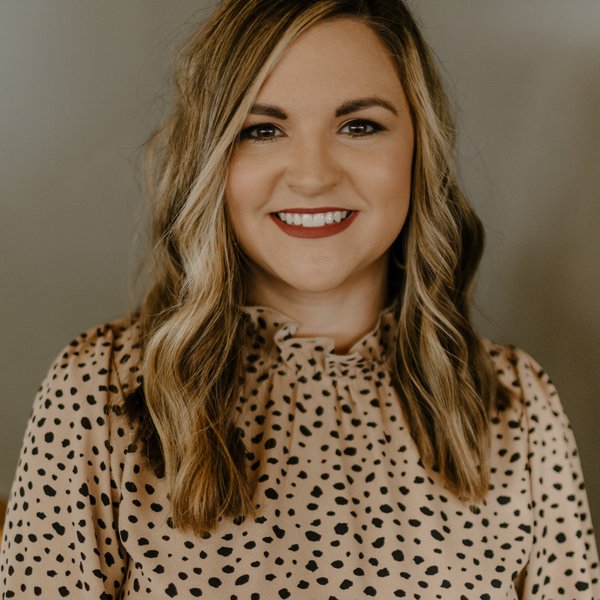
Kelly Flowers
Regional Vice President of Operations, LHC Group

Tim Rowan
CEO, Rowan Consulting Associates
Dione Henry
Home Health, Manager, Ozark Health Medical Center

Warren P. Hebert ,Jr.
Home Care Association of Louisiana, School of Nursing, College of Nursing and Health, Loyola Univer

Rebecca Johnson
Home Health, Manager, Ozark Health Medical Center
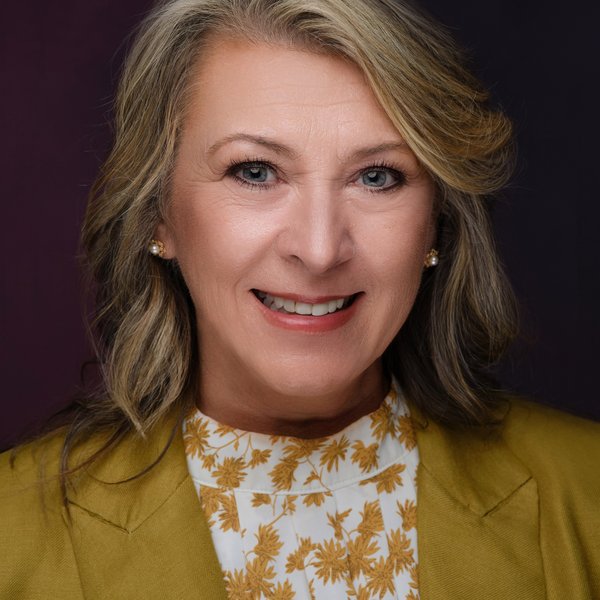
Debby Taylor
Agency Director, Baptist Home Health

Beau Sorensen
Director of Operations, Administrator, CFO, and COO, First Choice, Curantis Solutions
Venue
Hilton - New Orleans Riverside
Chart Room
New Orleans, Louisiana
Two Poydras Street,
New Orleans,
Louisiana 70130
How to get to the conference
Getting Here
Louis Armstrong New Orleans International Airport (MSY) is about 25 minutes away, and the Amtrak station is a mile from the hotel. Shuttle transportation to/from the airport is available for 10 or more guests (fee applies).
Parking & Transportation
Self-parking is available in our garage for $44 per day with in and out privileges. Valet is available for $49.
Nearby Attractions
| Riverwalk | 0.2 mi |
| Harrah's New Orleans | 0.2 mi |
| Cruise Terminal | 0.4 mi |
| Ernest N. Morial Convention Center | 1 mi |
| Superdome | 1 mi |
| World War II Museum | 0.5 mi |
New Orleans is a beautiful area in the in the South/South Central USA with a lot of things to do.
Some of the nearby attractions are:
- French Quarter
- Houmas House and Gardens
- Mardi Gras World
- New Orleans Museum of Art
- The National World War II Museum
- The Cabildo
- Audubon Zoo
These are only some of what New Orleans, LA offers for you. You can find a lot of additional information on what do to, where to eat, where to have fun, etc. at https://www.neworleans.com/things-to-do/
H3IT attendees can make hotel reservations at the conference hotel or at one of the various hotels in the area. The conference does not make hotel arrangements.
New Orleans Images
New Orleans Images






Contact
Home Healthcare, Hospice, and Information Technology Conference
Hilton New Orleans Riverside
Two Poydras Street
New Orleans, Louisiana 70130 USA
e-mail : contact@h3it.org
Dates and Deadlines
| Abstract Submissions | Aug 15, 2025 |
| Acceptance Notifications | Sep 3, 2025 |
| Camera-Ready Abstracts and Presentations | Sep 26, 2025 |
| Conference | Nov 1, 2025 |
Past H3IT Conferences




H3IT 2021
Events 2021, 2024
New Orleans, LA
October 22, 2021